Authentic Pad Thai with Shrimp
Classic Thai Street Food at Home
Prep Time
25 mins
Cook Time
15 mins
Servings
4
Difficulty
Medium
Published
June 5, 2025
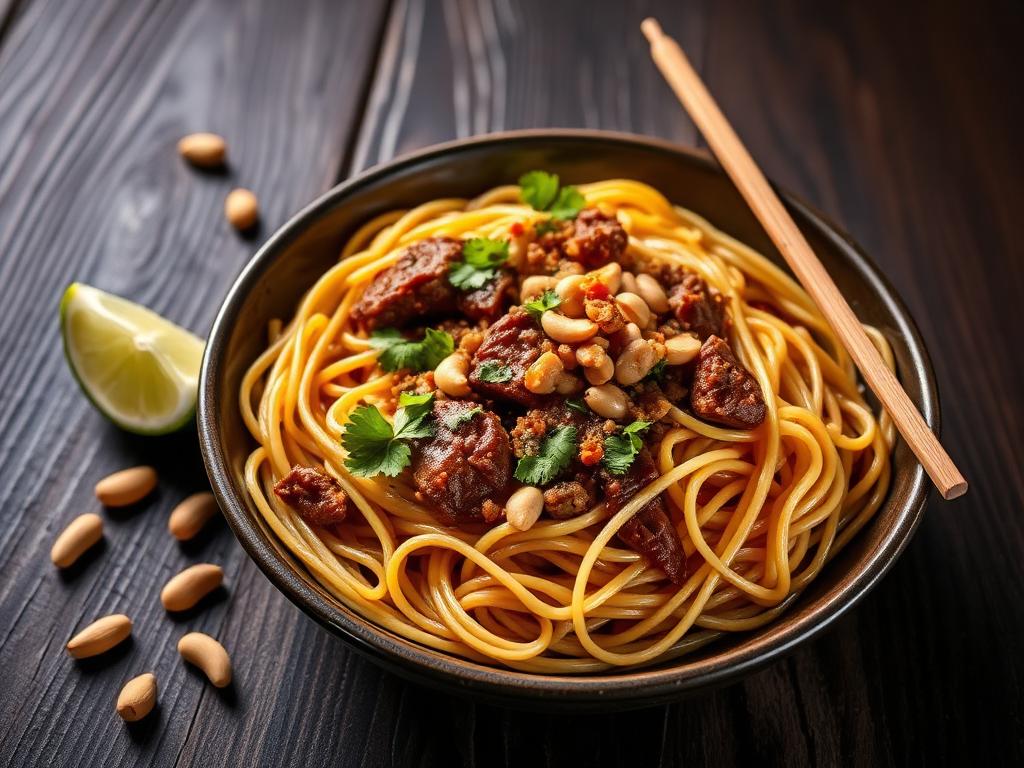
Pad Thai is Thailand's most famous noodle dish, and this authentic recipe brings the vibrant flavors of Bangkok street stalls directly to your kitchen. This beloved dish combines tender rice noodles with succulent shrimp, scrambled eggs, crunchy bean sprouts, and the perfect balance of sweet, sour, salty, and umami flavors in the sauce. The key to restaurant-quality pad thai lies in the sauce - a harmonious blend of tamarind paste for tanginess, fish sauce for depth, palm sugar for sweetness, and dried shrimp for that authentic funky undertone. Unlike many Western interpretations that rely heavily on ketchup or excessive sweetness, this version stays true to Thai tradition. The cooking technique is equally important: high heat and quick stir-frying prevent the noodles from becoming mushy while developing those slightly charred edges that define great pad thai. Fresh garnishes of crushed peanuts, lime wedges, and fresh bean sprouts add texture and brightness. Whether you're cooking for a weeknight dinner or impressing guests with your culinary skills, this pad thai delivers authentic Thai restaurant flavor that's surprisingly achievable at home. Once you master this technique, you'll never order takeout pad thai again.
Ingredients
Instructions
- 1
Prepare the Noodles
Soak rice noodles in room temperature water for 30-45 minutes until pliable but not fully soft - they should still have a slight firmness as they'll cook more in the wok. Drain thoroughly and set aside. Using hot water will make them too soft and they'll break during stir-frying.
- 2
Make the Pad Thai Sauce
In a small bowl, whisk together tamarind paste, fish sauce, and palm sugar until sugar dissolves. Taste and adjust - it should be a balance of sour, salty, and sweet with sour being slightly dominant. Set aside. This sauce is the soul of your pad thai.
- 3
Prepare All Ingredients
Pad thai comes together extremely fast, so mise en place is crucial. Have all ingredients measured, chopped, and within arm's reach of your stove. Pat shrimp dry with paper towels - excess moisture prevents proper searing. Press tofu between paper towels to remove moisture.
- 4
Cook the Proteins
Heat wok or large skillet over high heat until smoking. Add 1 tablespoon oil, swirl to coat. Add shrimp in single layer, cook without stirring for 1 minute until pink on bottom, then flip and cook 30 seconds more. Remove immediately - shrimp should be just barely cooked as they'll continue cooking. Set aside.
- 5
Cook Tofu and Eggs
Add another tablespoon oil to wok. Add tofu cubes, cook until golden on all sides, about 3-4 minutes. Push to the side of the wok. Add beaten eggs to empty side, let set slightly, then scramble into small pieces. Remove tofu and eggs, set aside with shrimp.
- 6
Stir-Fry the Noodles
Add remaining oil to wok over high heat. Add garlic and dried shrimp (if using), stir for 10 seconds. Add drained noodles, immediately pour sauce over them. Using tongs or chopsticks, lift and toss noodles constantly to coat evenly and prevent sticking. The high heat will cook and char the noodles slightly - this is desirable.
- 7
Combine Everything
When noodles are tender and have absorbed the sauce (about 2-3 minutes), add back the shrimp, tofu, and scrambled eggs. Add green onions and half of the bean sprouts. Toss everything together for 30 seconds just to heat through. Remove from heat immediately.
- 8
Serve Immediately
Divide pad thai among four plates. Top each serving with remaining fresh bean sprouts, chopped peanuts, and cilantro. Serve with lime wedges and chili flakes on the side. Encourage everyone to squeeze fresh lime over their portion - it brightens all the flavors. Serve immediately while noodles are hot and still slightly bouncy.
Pro Tips
- 💡Real pad thai is made in a screaming hot wok - if your wok isn't smoking, it's not hot enough.
- 💡Tamarind paste is essential for authentic flavor - don't substitute with ketchup or regular vinegar.
- 💡Cook in smaller batches if your wok isn't large enough; overcrowding causes steaming instead of stir-frying.
- 💡Rice noodles continue absorbing liquid; serve immediately or they'll become dry and clumpy.
- 💡For a more authentic flavor, seek out preserved radish (chai poh) at Asian grocery stores and add with the noodles.
Nutrition Facts
Per serving (approximate values)
520
Calories
28g
Protein
62g
Carbs
18g
Fat
References & Resources
Helpful resources for nutrition data, food safety guidelines, and cooking techniques:
- USDA FoodData Central — Comprehensive food composition & nutrition database
- FDA Food Safety — U.S. food safety regulations and guidance
- USDA FSIS — Food Safety and Inspection Service
- WHO Food Safety — Global food safety information and resources
- USDA MyPlate — Dietary guidelines and healthy eating tips
- Serious Eats — In-depth recipes, techniques, and science of cooking
- Wikipedia: Cooking — Overview of cooking history, methods, and science
You Might Also Like
Authentic Thai Green Curry
Honey Garlic Glazed Salmon
Crispy Honey Garlic Chicken Bites