Classic Greek Salad
Fresh Mediterranean Flavors
Prep Time
15 mins
Cook Time
0 mins
Servings
4
Difficulty
Easy
Published
June 22, 2025
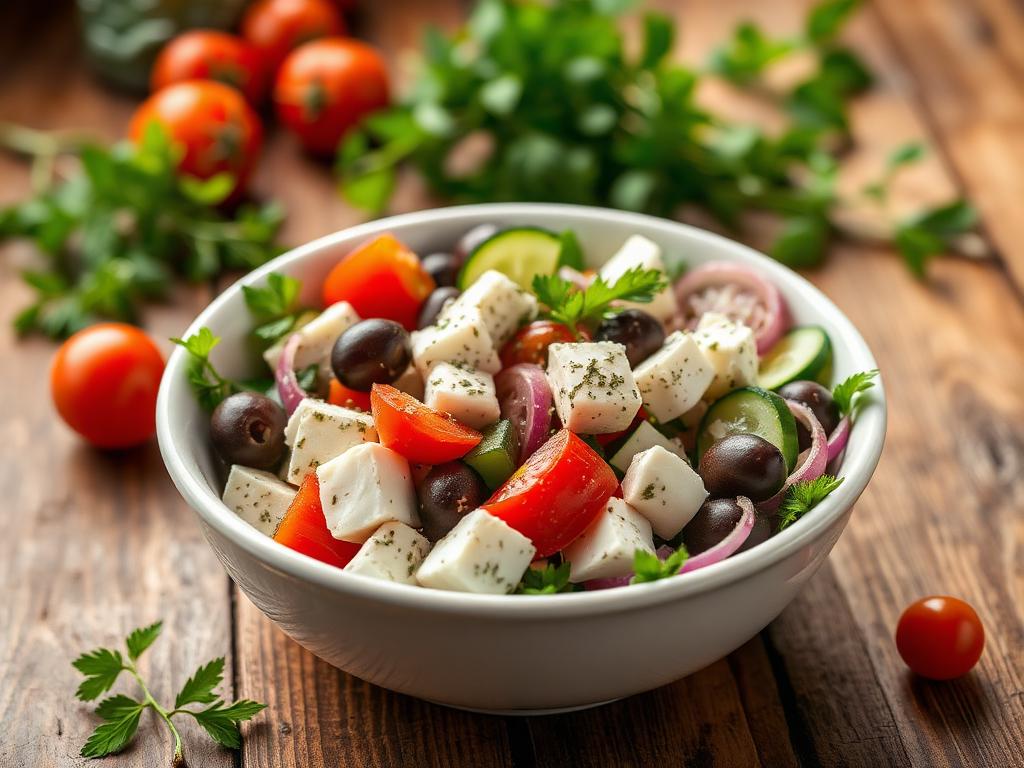
I spent two weeks island-hopping through Greece one summer, eating my way from Athens to Santorini, and if there is one thing I learned, it is that Americans have been making Greek salad wrong for decades. Every taverna I visited served the same thing: big, rustic chunks of impossibly ripe tomatoes, thick slabs of cool cucumber, rings of pungent red onion, a few pieces of green pepper, a handful of briny Kalamata olives, and - crucially - a single thick slab of feta cheese perched on top like a crown, never crumbled, never hidden beneath the vegetables. No lettuce. Not a single leaf. That American habit of using Greek salad ingredients as a topping for a bed of romaine? Complete fabrication. The authentic horiatiki, as it is called, celebrates the vegetables themselves, dressed in nothing more than excellent olive oil, a splash of red wine vinegar, and dried oregano rubbed between your palms to release its fragrance. The feta comes in a thick slice that you break apart with your fork as you eat, mixing bites of salty cheese with sweet tomato and cool cucumber. It is simple in a way that requires confidence - there is nowhere to hide, so every ingredient must be perfect. The tomatoes should be so ripe they are almost falling apart, their juice pooling at the bottom of the bowl to mix with the olive oil and create the best bread-dipping sauce you have ever tasted. The feta should be made from sheep or goat milk, brined until tangy and creamy. The olives should be real Kalamata, plump and meaty, not those sad canned things. When you assemble everything and take that first bite - the crunch of onion, the burst of tomato, the salt of cheese and olive, all tied together by grassy olive oil - you will understand why this dish has been the centerpiece of Greek tables for centuries.
Ingredients
Instructions
- 1
Start with the Best Tomatoes
The tomatoes are the foundation of everything, so do not settle for anything less than peak ripeness. Look for tomatoes that smell intensely of tomato at the stem end, that feel heavy for their size, and that give slightly when pressed. If you can find heirloom varieties - those lumpy, ugly, gloriously flavorful specimens at farmers markets - use them. Cut the tomatoes into generous chunks, not precise cubes. You want irregular pieces that capture dressing in their crevices. Place them in your largest, most beautiful serving bowl.
- 2
Prepare the Cucumber
Here is a trick I learned from a grandmother in Mykonos: peel the cucumber in stripes, leaving some skin for color and crunch. Cut it lengthwise into quarters, then slice into thick half-moons. If your cucumber is seedy, scoop out the watery centers with a spoon - they dilute the dressing and make the salad soggy. Add the cucumber to the bowl with the tomatoes.
- 3
Add the Aromatics
Red onion brings essential sharpness, but too much can overpower everything else. Slice it into thin rings or half-moons and separate them with your fingers. If your onion is particularly pungent, soak the slices in ice water for ten minutes, then drain and pat dry - this mellows the bite while preserving the crunch. Slice the green pepper into thin rings or chunks, discarding the seeds and membranes. Add both to the bowl.
- 4
Add the Olives
True Kalamata olives are almond-shaped, deep purple, and impossibly briny. They should be packed in brine or olive oil, never water. Pit them yourself if possible - pre-pitted olives tend to be mushy. Scatter them over the vegetables, tucking some beneath so they appear throughout the salad rather than just on top.
- 5
Dress Simply
In a small bowl, whisk together the olive oil, red wine vinegar, salt, and pepper. Crush the dried oregano between your palms directly over the bowl - the heat of your hands releases the essential oils and makes the oregano far more fragrant. Pour this simple dressing over the vegetables and toss very gently, lifting from the bottom rather than stirring, which would bruise the tomatoes.
- 6
Crown with Feta
Place a thick slab of feta cheese directly on top of the dressed salad - do not crumble it, do not mix it in. This is the traditional presentation, and it allows each person to break off pieces as they eat, controlling how much cheese they get in each bite. Drizzle a little extra olive oil over the feta, add a final pinch of oregano, and serve immediately with crusty bread for soaking up the juices at the bottom of the bowl.
Pro Tips
- 💡Use room-temperature tomatoes for the best flavor - cold mutes their sweetness and complexity.
- 💡Authentic Greek salad never contains lettuce - the vegetables are the stars, not a supporting cast.
- 💡Look for sheep or goat milk feta from Greece, which is tangier and creamier than cow milk versions.
- 💡Save the juices at the bottom of the bowl - mixed with the olive oil, they make an incredible sauce for dipping bread.
Nutrition Facts
Per serving (approximate values)
245
Calories
6g
Protein
12g
Carbs
20g
Fat
References & Resources
Helpful resources for nutrition data, food safety guidelines, and cooking techniques:
- USDA FoodData Central — Comprehensive food composition & nutrition database
- FDA Food Safety — U.S. food safety regulations and guidance
- USDA FSIS — Food Safety and Inspection Service
- WHO Food Safety — Global food safety information and resources
- USDA MyPlate — Dietary guidelines and healthy eating tips
- Serious Eats — In-depth recipes, techniques, and science of cooking
- Wikipedia: Cooking — Overview of cooking history, methods, and science
You Might Also Like
Rainbow Buddha Bowl with Tahini Dressing
Luxurious Wild Mushroom Risotto
Crispy Tofu and Vegetable Stir Fry